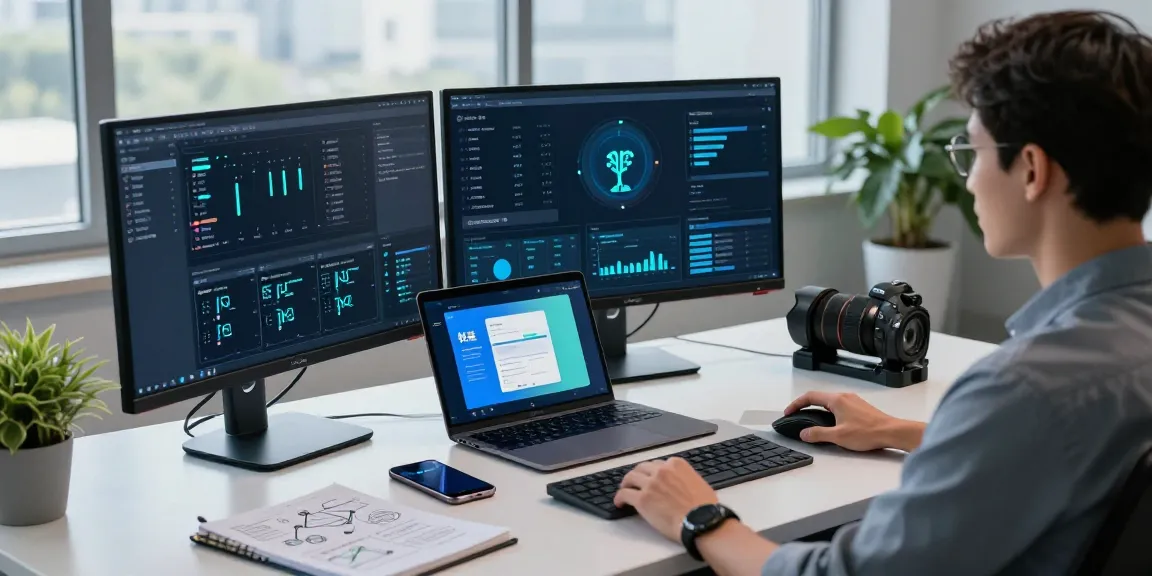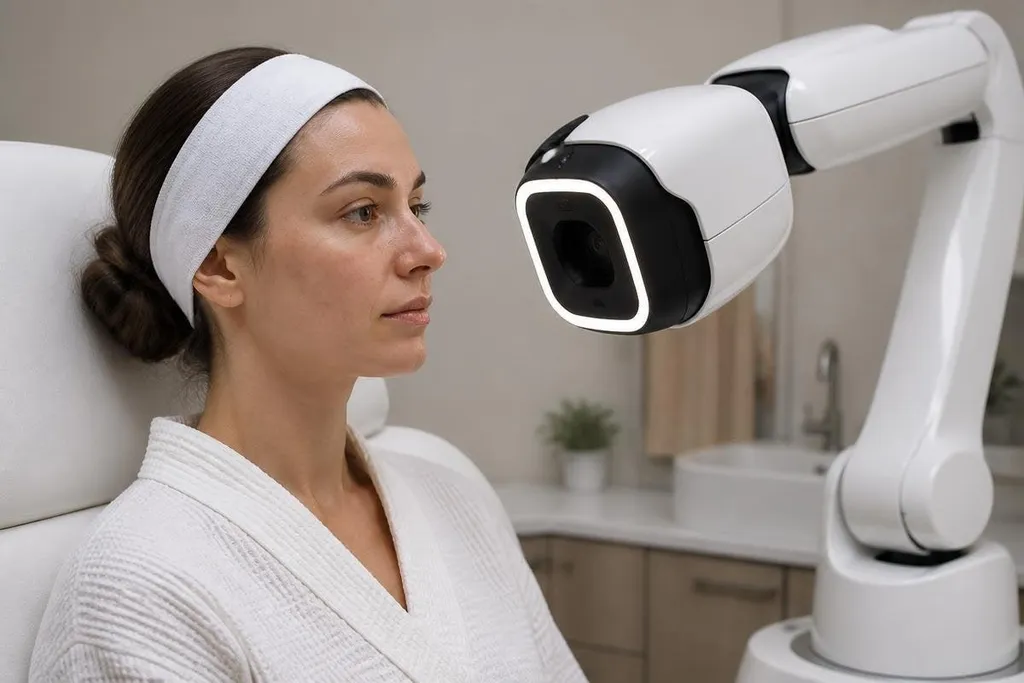
A beauty robot could change treatment settings for each person instead of using one plan for everyone. The useful part would happen before the robot moves: it would read skin images, record the treatment goal, then set a repeatable dose or motion.
Quick read
- A camera could check skin tone, texture, redness, and treatment areas before a session.
- A robotic arm could keep distance, angle, pressure, and movement steady.
- Published clinical results, prices, and product details are still needed before anyone can judge the real benefit.
The scan sets the plan
Personalization starts with usable input. A camera may record visible redness, dark spots, oil, or changes in texture, while a 3D scan could map the shape of a face or treatment area.
That information could help a system select a treatment zone and mark areas that need different settings. A person with uneven pigmentation, for example, may need separate settings across one area rather than one setting across the whole face.
The scan also needs a reference point. A system could save an image from each visit, then compare later images under the same lighting and camera position.
Without that control, a brighter room could look like a skin change.
The limits start here. A camera sees surface features, but it can't confirm every cause of redness, pain, or a skin mark. A qualified clinician would still need to check cases that fall outside the system's training or rules.
Where the robot adds value
A robot's main job would be repeatable movement. It could hold a tool at a set distance, keep an angle steady, and follow a mapped path across the treatment area.
Those details matter for treatments that use light, heat, suction, or controlled contact. A small change in distance can alter how energy reaches the skin. A change in pressure can affect comfort and the result.
The robot could also pause when its sensors detect movement. If a client turns their head or pulls away, the system could stop the arm before the tool reaches the next point. That response would need testing under real conditions, not only in a clean demonstration.
For clinics, repeatable motion may make staff training easier and session records clearer. It won't remove the need for staff who can assess skin, explain risks, and respond when the plan needs to change.
Software carries the hard questions
A personalized system needs rules for turning an image into a treatment setting. The maker would need to show which skin features the software reads, how it handles poor lighting, and what happens when the image falls outside its known range.
The training data also matters. Skin varies across tone, age, scars, hair, dryness, and past treatment. A system that works well on one group may give weaker results for another unless the maker tests those cases and publishes the results.
Privacy adds another practical concern. Face images and treatment records can identify a person, so clinics need clear rules for storage, access, deletion, and consent. A robot that improves repeatability but keeps sensitive images forever creates a different problem.
Before a clinic trusts a treatment robot, it needs more than a smooth skin scan. The record should name the image handling, consent step, treatment result, and human checks. Robot 24 can place those details beside the machine and test date, setting up the next test: what remains unproven.
What remains unproven
No evidence pack was supplied for this article, so there are no clinical results or product records to cite here. That means the benefits remain design possibilities rather than proof that robotic treatment gives better skin, shorter visits, or fewer side effects.
The useful test would compare robot-assisted sessions with trained human sessions using the same treatment, tools, follow-up period, and patient groups. The report would also need to show failed scans, safety stops, repeat visits, and cases where a clinician changed the robot's plan.
I'd wait for that evidence before treating a beauty robot as more than a controlled tool.
A clinic buyer's checklist
Before buying or booking a robot-assisted treatment, check:
- Named treatment: The maker states which procedure the system supports.
- Scan limits: Staff can explain when lighting, skin features, or movement can spoil the scan.
- Human control: A trained person can pause, change, or stop the session.
- Recorded settings: The clinic can show the dose, path, contact pressure, or pulse duration used.
- Follow-up plan: The clinic measures results after treatment under consistent conditions.
- Privacy terms: The consent form explains how face images and treatment records are stored.
The next useful proof is a published trial with clear patient groups, fixed treatment settings, and follow-up images taken under matching conditions. Until that appears, the robot's strongest case is steady movement and repeatable records, not a promise of better skin.